Quest for Truth
Posted by South Jersey News Online April 24, 2008 11:21AM
Photographer plans visit to Africa to study slavery in South Jersey
By Kaelin O'Connell
koconnell@sjnewsco.com
As photographer Beverly Collins-Roberts described a 2002 trip to Camden's Pomona Hall, she could have been narrating a horror movie.
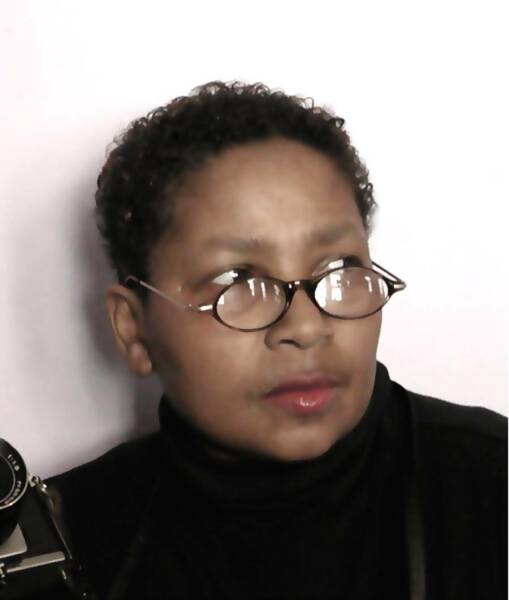
Self Portrait 01 Photo © 2001
Photographer Beverly Collins-Roberts is shown with her camera.
"I had gotten a really strong, painful, fearful feeling as soon as I put my foot on the second step going up to the attic," she said. "(The museum director) had already told me nobody goes up there because it was so eerie."
A year later Collins-Roberts, 58, learned 14 slaves had lived in that room. She knew the house had been a slave house 300 years ago -- that's why she was there in the first place - but she did not know where the slaves slept until her gut (and, later, historical documentation) told her: Directly above the kitchen. In the attic.
That strong, personal reaction to the history inside the Pomona Hall, paired with a lifelong connection to Camden, pushed Collins-Roberts to pursue the story of slavery in South Jersey, and in 2005 she finished "Unhush," an award-winning short film about Pomona Hall that aired on PBS.
But slavery in South Jersey spread farther than one home, which is why Collins-Roberts is now recording oral histories, expanding her research and traveling to Africa this summer. She plans to put her findings into an exhibit in 2009 and make another documentary. The scope of the project grew with her discoveries.
Before her trip to the Pomona Hall, Collins-Roberts' knowledge of slavery in New Jersey started and ended with the Underground Railroad; her great-, great grandfather, William Still had helped run it.
"Never in our wildest dreams did we think we'd find there was a slave port," she said. "From 1761 to 1765 they sold slaves at Wiggins Park where the aquarium is; the auction block was right there. Prior to that they were being sold in Philadelphia, and the only reason they stopped selling (slaves) in Philadelphia was they had a tax on them, like a tariff. When it went up to 15 percent, they didn't want to pay the tax so they said 'Let's sell them on the Jersey side,'" Collins-Roberts said.
Because she felt that limiting her research to America would tell only half of slavery's story, Collins-Roberts is going to Ghana and Guinea for six weeks this summer to travel, interview and shoot.
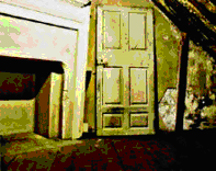
Photo by Beverly Collins-Roberts © 2002 
The slave quarters at Camden's Pomona Hall is shown.
Collins-Roberts learned 14 slaves had lived in that room.
"I'm going to connect the two worlds, from whence they came and where they are, especially because I know they came to where I've lived my whole life ... There have been stories told about the transatlantic slave trade, but not connecting the two cities. This story has never been told before." She said that work is just as important in Africa as it is here.
"The one thing they really have not understood was that those people who were sold or purchased, are us, the African-Americans who live here. (Africans) never put two and two together that we are their brothers and sisters," Collins-Roberts said.
She has gotten funding from the Leeway Foundation Grant, and Collins-Roberts is supplementing that with a fundraiser at the Walt Whitman Art Center on May 16 to sell her photographs. The event is invitation only, but anyone can get invited by logging onto www.bevcr.com.
Collins-Roberts plans to take more trips before completing the exhibit in 2009.
When asked whether her discoveries have changed the way she sees Camden, where Collins-Roberts has lived her whole life in the same house, she answered "not changed, revealed."
"I have a better understanding of why Camden has always been very racist," she said.
She hoped audiences would gain awareness and understanding from her findings.
Some already have.
"Everybody has said to me, 'Now we understand why that building had such an eerie feeling when you walk by it,'" she said. "You could feel it, but nobody understood why."